The point
The photographs you have seen are the best ten minutes of somebody’s hour
Which is worth knowing, because both halves of the reality are extraordinary and only one of them is marketed.
What usually happens
You leave your bag with the porters, go in with the guide, and the trackers point.
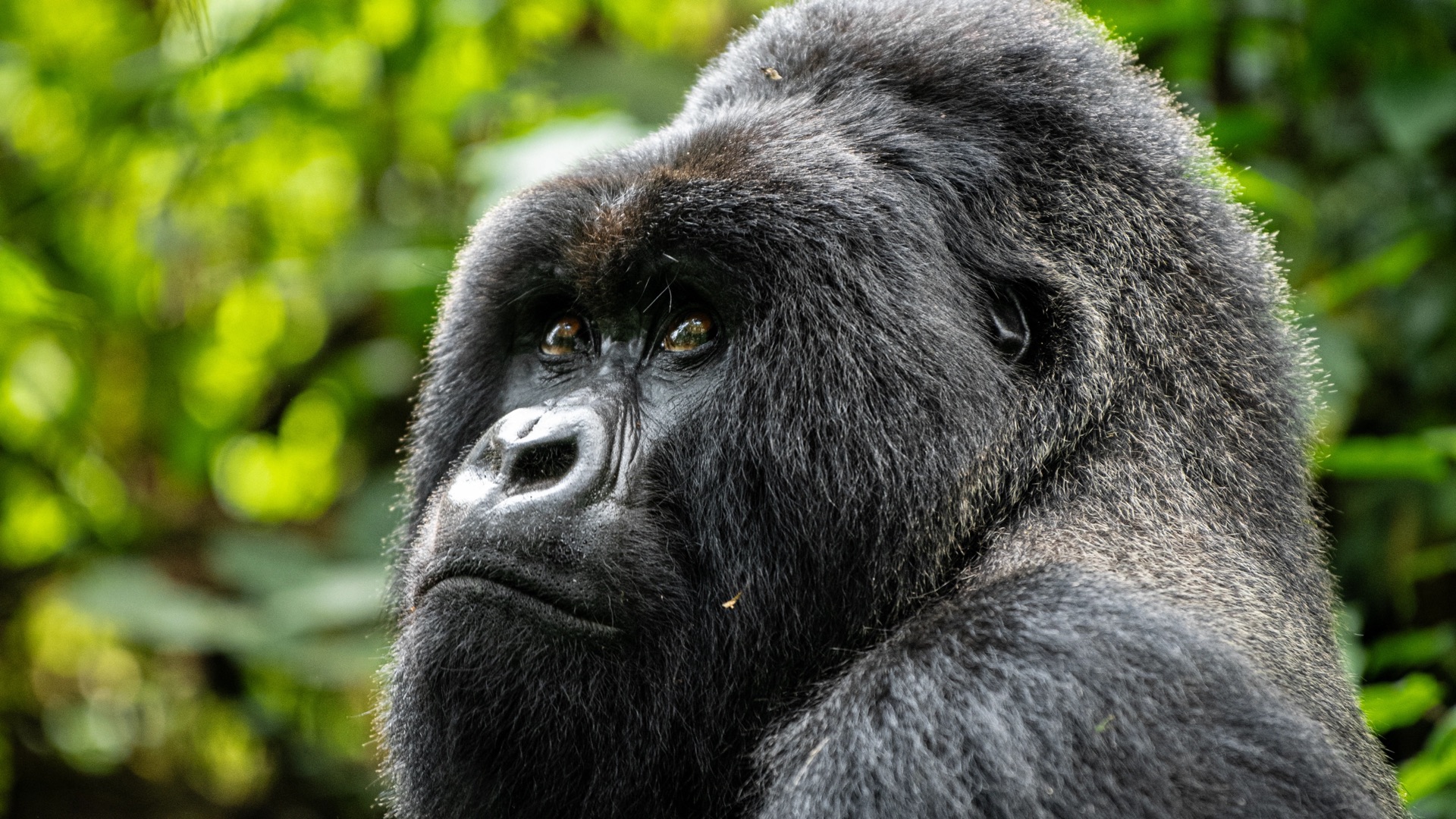
A good deal of the time the family is resting — mountain gorillas spend a lot of the day eating and resting — in thick vegetation on a slope. What you see is a shoulder, a face, an arm through leaves, a great black shape shifting.
It is quieter than people expect. There is a lot of chewing, some rumbling contact calls, and the sound of a guide making a low throat noise to tell the family you mean nothing by being there.
And then something happens
A juvenile comes closer than the rules permit and the whole group shuffles backwards, because the distance rule is yours to keep rather than theirs.
A female moves into the open with an infant on her back. Two youngsters wrestle down a slope. A silverback stands, and walks past, and you understand for the first time how large he is.
Almost everybody gets some version of that. It is not the whole hour and it does not need to be.
The rules, and why they exist
- A minimum viewing distance, which has been increased in recent years. Mountain gorillas are susceptible to human respiratory disease and the population is small.
- No flash photography, at any point.
- Do not go if you are unwell. You will be asked, and you should answer honestly — a cold is a serious matter for a gorilla.
- Follow the guide immediately, not after thinking about it. If you are told to crouch, back away or stay still, do it at once.
- Keep your voice low and move slowly. Sudden movement is what unsettles them.
- Eat and drink away from the family, not among them.
Health and distance requirements have changed more than once in recent years and are properly a matter for current authority guidance. We confirm the position for your dates as part of the planning.
How fast it goes
Very. The hour is timed from the moment you reach them, and people consistently report that it felt like fifteen minutes.
This is the strongest practical argument for two treks. A single hour, once, on one morning, is a small window on a thing you have travelled a long way for.
Put the camera down
For ten minutes of the hour, at least. Almost everybody who does says afterwards that it was the best part.
The pictures will be what they will be — the light is poor and other people have taken better ones. What you cannot get later is having actually watched a gorilla family for ten uninterrupted minutes with your own eyes.
Afterwards
People are frequently quiet on the walk down. That is normal and it is not disappointment.
The thing most often reported, weeks later, is not a photograph or a fact but the eye contact, and how unexpectedly ordinary and unsettling it was to be looked at properly by something that was clearly making its own assessment of you.
Ready to turn this into a real itinerary?
Send us your dates, who is travelling and roughly what you want to spend per person per night. Our gorilla specialist comes back within 24 hours with a plan built around them and a costed quote.