Camera
Close subject, terrible light, no flash, one hour
A combination that catches out people with very good equipment, and one you can prepare for entirely at the lodge the night before.
Bring a fast lens, not a long one
This is the mistake people make. They pack the telephoto they use on savanna and find themselves too close to use it, in light that will not support it.
You are frequently within a few metres. A mid-range zoom — something in the 24-70 or 24-105 class — is generally the most useful lens of the hour, with a moderate telephoto as the second body or the second choice.
Maximum aperture matters more than reach. Under a closed canopy in rain, a stop is worth more than a hundred millimetres.
Set up for high ISO before you leave
Decide your ceiling at the lodge, not on a slope with wet hands and a gorilla ten metres away.
Auto ISO with a floor on shutter speed is the practical setting for most people. Gorillas move slowly but they do move, and an infant does not move slowly at all.
Metering: black fur, dark leaves
The combination reliably fools meters into overexposing to compensate for all that darkness, which blows the highlights on a face and leaves the fur flat.
Expose for the face, check the back of the camera once, and adjust. It is the single correction that most improves the results.
The practical kit
- Rain protection for the camera. A proper cover, or a bag and a good deal of care.
- Two or three lens cloths, because everything fogs and drips and one cloth is soaked in minutes.
- A spare battery, carried warm. Cold and damp shorten them.
- A dry bag for the walk in and out, since the camera is not out for most of it.
- No flash, which is not permitted and would be a poor idea regardless.
- Nothing you would mind dropping. You will use both hands on the way up.
What to actually shoot
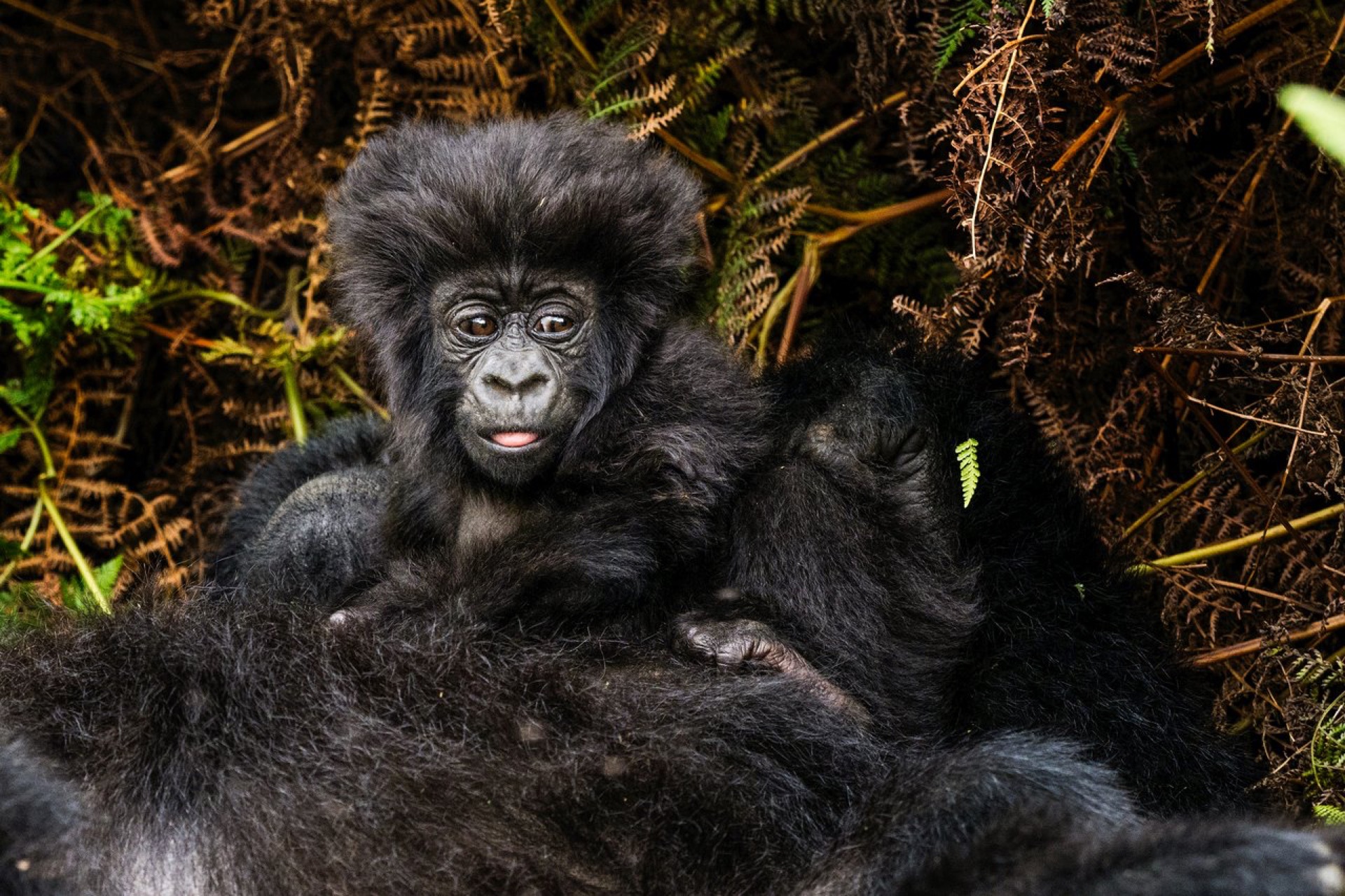
Faces and hands, close, because that is what nobody gets from a photograph of a gorilla in a zoo and it is what the proximity is for.
Wide shots that include the vegetation, which convey the habitat and are consistently the pictures people look at afterwards. A gorilla in a wall of green says more than a tight portrait.
And the group of humans, crouched and soaked and staring. It is a good photograph and nobody takes it.
A note on video
Short clips of a few seconds are far more useful than long takes, and sound is a large part of why — the chewing, the rumbling, the rain — so do not shoot with a hand over the microphone.
Check whether any current guidance restricts equipment before you go; rules around what may be brought and how close have changed in recent years.
The most important setting
Put it down for ten minutes.
Better photographs of gorillas exist than the ones you are going to take, in better light, by people who spent weeks there. What does not exist anywhere is your memory of having watched them properly, and that is what the hour is actually for.
Ready to turn this into a real itinerary?
Send us your dates, who is travelling and roughly what you want to spend per person per night. Our gorilla specialist comes back within 24 hours with a plan built around them and a costed quote.